


Why Real Estate Is Booming in the Sun Belt States
Over the past few years, a major shift has been taking place in the United States housing market. Millions of Americans have relocated from expensive coastal cities to fast-growing Sun Belt states such as Texas, Florida, Arizona, Tennessee, and North Carolina. This migration trend is reshaping local economies, housing demand, and real estate opportunities across […]
Over the past few years, a major shift has been taking place in the United States housing market. Millions of Americans have relocated from expensive coastal cities to fast-growing Sun Belt states such as Texas, Florida, Arizona, Tennessee, and North Carolina.
This migration trend is reshaping local economies, housing demand, and real estate opportunities across the country.
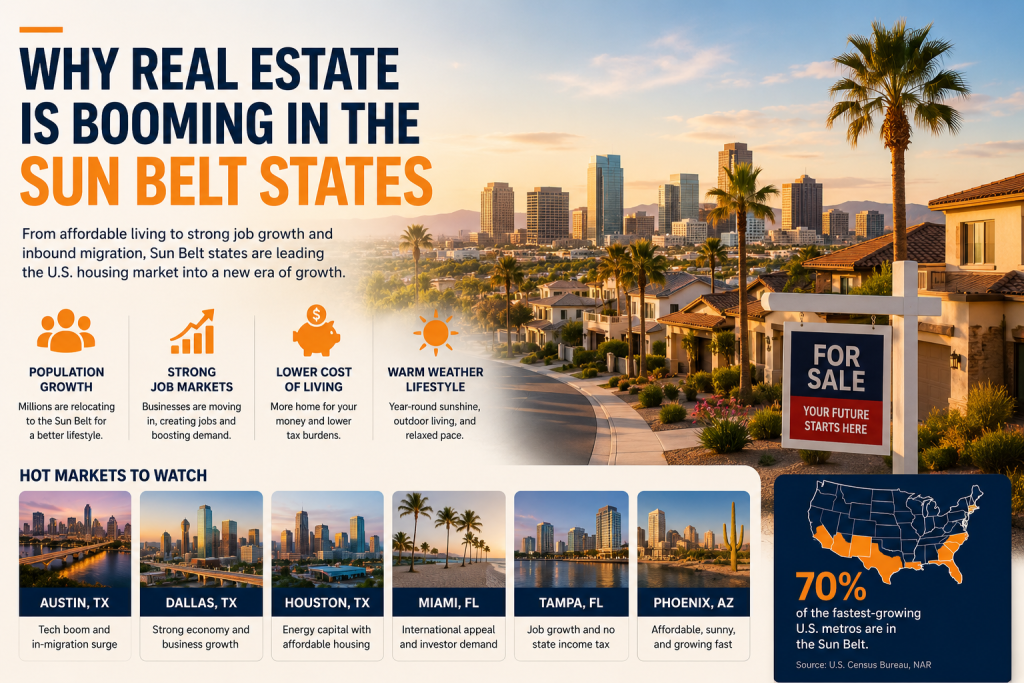
What Is the Sun Belt?
The Sun Belt refers to a region stretching across the southern United States, known for its warm climate, growing job markets, and lower cost of living.
Major cities benefiting from this growth include:
- Austin, Texas
- Dallas, Texas
- Houston, Texas
- Miami, Florida
- Tampa, Florida
- Phoenix, Arizona
- Nashville, Tennessee
- Charlotte, North Carolina
Many of these cities have experienced population growth significantly above the national average.
Why Are People Moving?
Several factors are driving migration into Sun Belt markets.
Lower Cost of Living
Compared to cities such as New York, San Francisco, Los Angeles, and Seattle, many Sun Belt locations offer more affordable housing and lower taxes.
For many families, this means:
- Larger homes
- Better quality of life
- Reduced living expenses
- Greater financial flexibility
Remote Work Changed Everything
The rise of remote and hybrid work has given people more freedom to choose where they live.
Many professionals no longer need to remain close to corporate offices and are prioritising affordability, climate, and lifestyle instead.
Strong Job Growth
States such as Texas and Florida continue attracting businesses from technology, finance, healthcare, and logistics sectors.
New companies bring jobs, and jobs create housing demand.
What Does This Mean for Real Estate Agents?
Growing markets create opportunities but also increase competition.
As more agents enter expanding markets, standing out becomes increasingly important.
Buyers today expect:
- Professional marketing
- Property videos
- Social media content
- Market expertise
- Local knowledge
Simply posting a listing is no longer enough.
Video Is Becoming a Competitive Advantage
Many homebuyers now discover properties through Instagram, TikTok, YouTube, and Facebook before ever visiting a property portal.
Video helps agents:
- Showcase homes more effectively
- Reach larger audiences
- Build trust faster
- Generate listing inquiries
- Strengthen their personal brand
This is particularly important in fast-moving markets such as Miami, Dallas, Phoenix, and Austin, where buyers often make decisions quickly.
The Rise of Digital-First Real Estate Marketing
The most successful agents are increasingly investing in content creation and personal branding.
Modern tools such as Momenzo help agents create professional property videos, listing presentations, social media content, and branded marketing materials directly from their phones.
As housing markets become more competitive, visibility becomes just as important as local expertise.
What Happens Next?
Most economists expect Sun Belt growth to continue throughout the coming years.
Population increases, business investment, and infrastructure development are likely to support ongoing housing demand across many southern states.
For real estate professionals, this means one thing:
The opportunity is growing, but so is the competition.
Agents who build strong personal brands, embrace video marketing, and adapt to changing buyer behaviour will be best positioned to succeed in the next phase of the U.S. housing market.
Final Thoughts
The migration toward the Sun Belt is more than a temporary trend. It represents a long-term shift in where Americans choose to live, work, and invest.
Understanding these changes can help agents better serve clients, identify opportunities, and stay ahead in one of the most dynamic periods the U.S. real estate market has experienced in decades.
Read These Next

Studio Photoshoots in Philadelphia: Why They Became So Popular
The studio photography industry in Philadelphia changed massively over the last few years. Studio photoshoots used to feel formal and…

Florists in Connecticut: Why the Flower Business Feels Different Here
The flower business in Connecticut has its own personality. It’s not as chaotic as New York City, not as tourist-driven…

Independence Day 2026: The United States Turns 250
The Historic Meaning of America’s 250th Anniversary The year 2026 marks an extraordinary milestone in American history: the 250th anniversary…

