


Top 10 Most Futuristic Cities in the USA to Visit in 2026
If you think of the USA as just highways, fast food, and skyscrapers — 2026 is here to completely flip your script. Across the country, cities are transforming into high-tech hubs, eco-smart communities, and culture-forward spaces that feel more like sci-fi than real life.
If you think of the USA as just highways, fast food, and skyscrapers — 2026 is here to completely flip your script. Across the country, cities are transforming into high-tech hubs, eco-smart communities, and culture-forward spaces that feel more like sci-fi than real life.
We’re not talking about gimmicks. These cities are rebuilding from the ground up, blending tech, art, sustainability, and innovation into the everyday lives of locals and visitors alike.
Ready for the future? Let’s explore the 10 most futuristic cities in America you absolutely have to see in 2026.

Austin, Texas – The New Creative Tech Capital
You’ve probably heard people say “Austin is the new Silicon Valley.” But that’s actually underselling it. In 2026, Austin has become a creative-tech powerhouse with a soul — where startups, artists, coders, and musicians all share the same sidewalks and coworking spaces.
Smart Neighborhoods and AI-Powered City Planning
What makes Austin so futuristic? Let’s start with “smart zones” like the East Side Innovation Corridor — built with real-time data systems that manage traffic flow, lighting, and even waste disposal. The homes are pre-wired with solar panels, AI climate control, and self-healing concrete that literally fixes itself over time.
The city’s transit system is also next-level. Hyperloop test pods are in play, and the city has one of the most advanced bike-and-ride AI maps in the country. You don’t just check Google Maps — you get route recommendations based on your energy levels, weather, and noise preferences.
Why Digital Nomads Love Austin
Austin’s affordability (compared to SF or NYC), creative culture, and killer food scene make it digital nomad heaven. There are hundreds of coworking cafes, rooftop work lounges, and even “focus pods” you can book by the hour with biometric entry.
Plus, Austin still keeps it weird. Robots may deliver your tacos, but you’ll still hear live banjo music while sipping nitro cold brew made by a tattooed barista in a UFO-themed trailer.
Seattle, Washington – Green Energy and Urban Forests
Seattle has always had that Pacific Northwest cool — but in 2026, it’s cooler and smarter. The city is pushing boundaries in eco-architecture, urban rewilding, and AI-supported infrastructure.
Eco-Architecture and Vertical Gardens
Downtown Seattle looks like the set of a futuristic nature film. Buildings now sport “living skins” — vertical gardens that clean the air, reduce heat, and look gorgeous. The Amazon Spheres, once a novelty, are now just one of many indoor jungles where people actually work.
The new Climate District in Belltown is a 100% green energy zone powered by geothermal and solar — and its apartments come with compost chutes, rainwater showers, and AI-driven home assistants that don’t feel creepy.
Smart Transport Meets Nature
Seattle’s public transit uses AI to sync ferry, light rail, and bike share schedules, while eco-shuttles now serve as floating water taxis across Lake Union.
Want a taste of nature? The city has reintroduced forests into its urban grid with tree canopies, moss parks, and micro-wetlands in public plazas. You’re literally breathing cleaner air just walking to brunch.
Futuristic, but grounded. That’s Seattle in 2026.
Miami, Florida – Crypto, Climate, and Culture
Forget the flashy stereotypes. Miami in 2026 has matured into a tech-savvy, climate-resilient, art-fueled metropolis — all while keeping its tropical edge.
The City Where Blockchain Meets Beachfront
Thanks to progressive leadership and massive private investment, Miami has become a global crypto capital. Major companies now operate on blockchain-based payrolls, and visitors can pay for hotels, drinks, and even scooter rentals with crypto wallets.
“Bitcoin Beach” isn’t a meme — it’s an actual stretch of shorefront lined with NFT galleries, crypto-cafes, and startup meetups.
Resilience Tech Against Rising Seas
Miami’s future also includes surviving climate change. The city has deployed robotic floodgates, elevated waterfront parks, and floating neighborhoods with homes that can rise with sea levels.
Sensors across the city track humidity, air quality, and water levels in real time, all viewable by residents on public dashboards. It’s like living inside a climate science lab — only with palm trees and rooftop DJs.
The fusion of tech, climate action, and beach culture makes Miami an unmissable stop in 2026.
San Francisco, California – Still the Innovation Core
Despite competition from rising cities, San Francisco isn’t fading — it’s evolving. In 2026, it remains a global epicenter for AI, robotics, and biotech, while slowly but surely reimagining itself for a more human future.
Robotics, Biotech, and Smart Housing
Self-driving cars? Old news. In SF, self-driving delivery bots, robo-nannies, and AI medical drones are part of daily life. Biotech companies have launched gene therapies for chronic diseases, and entire districts are zoned for “bio-innovation villages” that mix labs with parks and cafes.
Housing remains pricey, but new models like 3D-printed modular pods, co-living high-rises, and AI rent-sharing apps are helping change that.
How the City Is Reinventing Urban Life
San Francisco’s latest urban project — The Grid Reset — is rethinking zoning altogether. Streets are being converted into car-free “community belts”, full of art, food trucks, green roofs, and multi-use spaces.
Tech is everywhere, but it’s not just for profit anymore — it’s for people. That’s the future SF is now fighting for.
Denver, Colorado – High-Tech Meets High Altitude
Denver might surprise you, but in 2026, it’s a rising star in climate tech, health innovation, and outdoor-integrated living. It’s one of the few cities blending modern infrastructure with mountain energy.
Smart Air Quality and Alt-Living Trends
Denver’s air monitoring network is the most advanced in the country. Each district has sensors that adjust public air filtration and notify locals of pollen, pollution, or even wildfires — making it ideal for folks with allergies or asthma.
“Altitude tech” is a thing here — apps that help optimize hydration, sleep, and physical performance at high elevations. Fitness trackers even adapt workouts based on oxygen levels.
Coworking Cabins & Mountain-Linked Metros
The remote work culture in Denver is epic. People are literally working from smart cabins in the mountains — solar-powered, 5G-enabled, and connected to the city via electric rail.
Denver’s “mountain metro” plan is real: ski resorts, national parks, and trailheads are linked to downtown by a clean energy train line.
It’s the perfect blend of nature, tech, and freedom — making Denver one of the coolest cities of the future.
New York City – The Global Smart Metropolis
The city that never sleeps has become the city that never stops innovating. In 2026, New York isn’t just keeping up — it’s leading the global charge toward smart urban living, sustainable infrastructure, and public tech.
AI Trash Cans, Talking Statues & the Loop Line
Walk through NYC in 2026 and you’ll notice things talking to you. Statues now “speak” via augmented reality, giving you history lessons, jokes, or poetry when scanned with your phone. Public art isn’t just to look at — it engages.
The new AI-powered trash system sorts waste, signals pickups, and even shames litterbugs with flashing LED reminders. It’s funny… but it works.
The Loop Line, a recently opened elevated park/train hybrid, links Chelsea to the Lower East Side. It’s covered in greenery, walkable zones, bike paths, and open-air cafes. It’s like the High Line 2.0 — but bigger and more immersive.
Urban Farming and Zero-Waste Initiatives
Every borough is sprouting vertical farms. Buildings now host rooftop orchards, edible walls, and compost exchange kiosks. Even bodegas have hydroponic herb gardens in the back.
NYC’s commitment to zero waste by 2030 is well underway, with residents separating trash into up to six categories, incentivized through a smart reward system.
There’s still that New York rush, but it feels… smarter. Cleaner. More thoughtful. Somehow, this massive machine of a city is becoming human again — and that’s the real magic.
Phoenix, Arizona – America’s Solar-Powered Smart City
You wouldn’t expect a desert city to lead in sustainability — but Phoenix in 2026 is a masterclass in how to turn climate challenges into futuristic innovation.
How Heat is Handled with Tech
Phoenix is blazing new ground with its “Cool Corridors” — shaded, sensor-controlled walking paths lined with water vapor misters and solar canopies. They make summer strolls feel surprisingly chill (literally).
The city’s buildings reflect heat using advanced nano-coatings. Solar paint is now standard on new construction, and adaptive window tinting shifts based on sun angle.
Real-time climate dashboards show residents when to exercise outdoors, when to hydrate, and even alert neighborhoods to localized heat spikes.
From Desert Sprawl to Sustainable Oasis
Urban sprawl is being reversed. Phoenix’s 15-minute neighborhood model connects homes, shops, and transit via green walkways and autonomous solar shuttles.
Water use? Highly optimized. Smart irrigation systems in homes and public parks monitor moisture in the soil and adjust output with weather patterns. Some lawns are actually “smart grass” — heat-resistant, drought-tolerant, and embedded with soil sensors.
Phoenix is no longer just surviving the heat — it’s rewriting what a future-ready desert city looks like.
Raleigh-Durham, North Carolina – The Future of Education and Research
This twin-city area — also known as the Research Triangle — has quietly become a superpower in biotech, clean tech, and smart learning ecosystems.
University Innovation + Biotech Hubs
Raleigh-Durham is home to some of the most advanced research campuses in the U.S. In 2026, university labs have partnered with startups and local government to build real-time health diagnostics, green building materials, and AI tools for classrooms.
The entire region is basically a living lab. Sidewalks are embedded with pressure sensors. Streetlights react to traffic. Even public bathrooms feature touchless everything and UV-cleaning robots.
Biotech companies have created personalized medicine centers — places where visitors can get genetic insights, personalized health regimens, and non-invasive treatments powered by nanotech.
AI in Medicine, Clean Labs, and Startup Accelerators
Durham’s health tech scene is exploding. Hospitals use AI to triage patients, automate diagnostics, and monitor recovery using wearable tech. Even their ERs feel like the set of a sci-fi movie — efficient, calm, and intelligent.
Education-wise, students now learn using mixed-reality headsets and AI-guided lesson plans that adapt to their pace and interests. This isn’t the classroom of the future — it’s already here.
If you want a taste of what tomorrow’s breakthroughs look like, Raleigh-Durham delivers.
Las Vegas, Nevada – Experiential Futures and Entertainment Tech
Vegas has always been about fantasy — but now, it’s blending entertainment, tech, and design to create mind-blowing immersive futures. In 2026, the Strip is basically a playground for all your senses.
VR Casinos, Drone Shows, and Immersive Nightlife
Traditional slot machines? Out. Now you can enter mixed-reality gaming arenas where you’re part of the action. Blackjack with holograms. VR craps tables. Augmented roulette where each spin comes with a full visual light show.
Don’t miss the drone fireworks — hundreds of synchronized drones creating 3D animations in the sky, choreographed to live music every night.
Clubs have gone immersive too. One famous venue lets you party inside a giant LED forest where the environment reacts to your movement, voice, and even your mood via wearable sensors.
Smart Tourism in the Desert
Vegas is also reinventing travel. Hotels are now energy-efficient “experience stacks”, where each floor has a unique theme — one might mimic Tokyo, another the Amazon Rainforest, all in hyperreal VR.
Self-driving taxis are the norm, while concierge AI bots help plan your night in five seconds flat — including weather, wait times, and budget in real time.
It’s wild, yes. But it’s also incredibly well-designed — proving that entertainment and intelligence can go hand in hand.
Detroit, Michigan – A Comeback Fueled by Innovation
Detroit’s story in 2026 is powerful. From economic collapse to rebirth through mobility tech, sustainable design, and community-led urban innovation — it’s the underdog city that’s now leading the pack.
Mobility Tech, EV Revolutions, and Startup Growth
Detroit is no longer just the Motor City — it’s the Mobility Capital of the World. You’ll find test zones for autonomous vehicles, electric delivery fleets, and smart traffic systems that have cut emissions by 60%.
EV charging is everywhere — and it’s free in many areas, thanks to solar-backed municipal programs. Local startups are experimenting with modular vehicles that shift shape depending on use: delivery, ride-share, or personal commute.
Art, Automation, and Urban Rebirth
Abandoned warehouses are now filled with co-ops, 3D printing labs, and art studios. Entire blocks have become innovation districts — open to creators, coders, and builders.
The city’s murals tell the story: from loss, to resilience, to innovation. Even the streetlights are smart — dimming automatically, tracking pedestrian safety, and playing ambient jazz in certain zones.
Detroit in 2026 is what transformation looks like — gritty, glorious, and driven by people who believe in something better.
Final Thoughts – What Makes a City “Futuristic”?
When we talk about “futuristic cities,” it’s not just about flying cars or holograms (though, let’s be honest, those are cool). What really defines a city of the future in 2026 is how it:
- Uses technology to serve people, not just profit.
- Prioritizes sustainability and climate resilience.
- Embraces diverse voices, cultures, and communities.
- Builds smartly — from the ground up, not just for show.
- Creates experiences, not just skylines.
The cities on this list didn’t just throw tech at a wall and hope it sticks. They integrated innovation into everyday life — whether it’s through smart streets, vertical gardens, AI-driven healthcare, or immersive cultural spaces.
These cities feel alive, forward-thinking, and constantly in motion. They make you think, “I could live here.” Or at the very least, “I need to come back.”
And the best part? This is just the beginning. The future is no longer something we wait for. It’s happening right now — and these cities are leading the way.
Read These Next
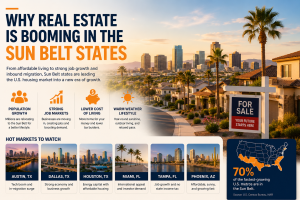
Why Real Estate Is Booming in the Sun Belt States
Over the past few years, a major shift has been taking place in the United States housing market. Millions of…

Studio Photoshoots in Philadelphia: Why They Became So Popular
The studio photography industry in Philadelphia changed massively over the last few years. Studio photoshoots used to feel formal and…

Florists in Connecticut: Why the Flower Business Feels Different Here
The flower business in Connecticut has its own personality. It’s not as chaotic as New York City, not as tourist-driven…

